

In recent years, there has been a persistent narrative that Internet Exchange Points are losing relevance: slower growth, fewer new members, traffic shifting toward private interconnects, in-network caching, and alternatives to public peering. This perception, however, is often based on oversimplified metrics and fails to capture how the interconnection ecosystem is truly evolving.
To better understand what is actually happening, we, together with John Souter and with the support and contributions of several experts from the peering and interconnection community, have produced an analysis titled Peering Market at a Glance. A study that explores how IXPs are evolving globally and why current trends should be read as a transformation, not a decline.
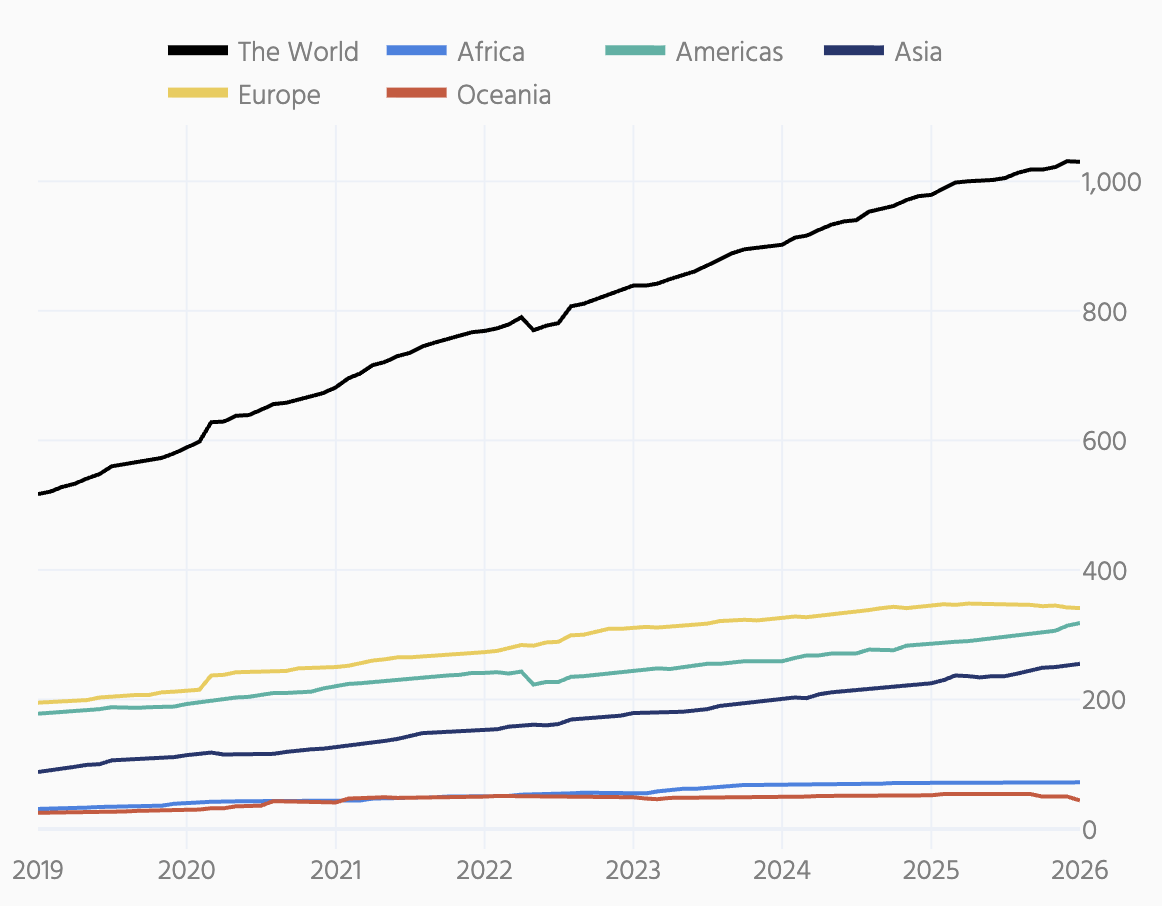
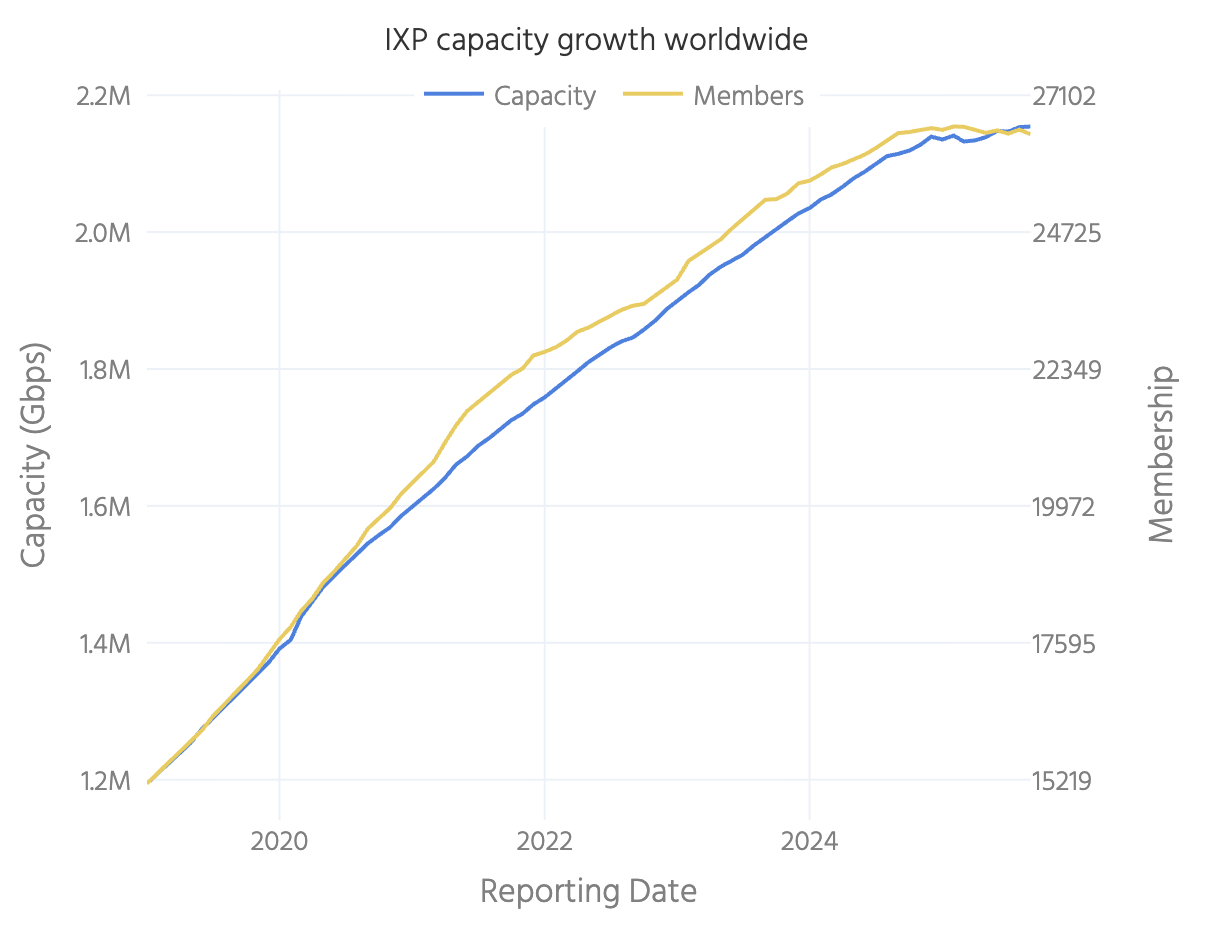
The data tell a different story. Global Internet traffic continues to grow relentlessly, but the way networks interconnect is changing. The slowdowns observed at large, mature IXPs are not a sign of crisis: they reflect a structural shift. Traffic is becoming more concentrated, interconnection strategies are growing increasingly selective, and models such as Private Network Interconnects (PNIs), in-network caching, and edge-oriented architectures are emerging as complements to public peering, not substitutes for it.
The analysis shows that the success and sustainability of IXPs cannot be measured solely by member count or nominal capacity figures. Telecom market liberalization, local content demand, demographic scale, data center ecosystems, and national infrastructure policies remain the true determining factors. This is why emerging markets continue to show robust growth, while the major historical hubs are evolving into increasingly complex interconnection platforms serving a far broader range of stakeholders.
The future value of IXPs will be measured less in terabits per second, and more in their ability to keep traffic local, support critical services, absorb extreme traffic spikes, and enable ultra-low-latency applications.
In an increasingly unstable geopolitical and technological landscape, peering remains a cornerstone of digital resilience, data sovereignty, and a genuinely decentralized Internet.
We are grateful to Philip Smith, Gabriel Adonaylo, Kyle Spencer, Katsuyasu Toyama, Maurizio Goretti, and Ege Cem Kirci for their invaluable contributions.
Download the full paper: https://www.namex.it/wp-content/uploads/2026/02/Peering_market_at_a_glance.pdf
— By Flavio Luciani, Namex CTO